
### 內容大纲1. **CEL加密货币概述** - CEL的起源和发展历程 - CEL的市场地位和现状2. **CEL的技术基础** - 区块链技术及其...
In the early days of Bitcoin, mining was a process that could be done from a home computer, with little competition and minimal power requirements. Fast forward to 2023, and the world of cryptocurrency mining has transformed dramatically. What was once a casual hobby has evolved into a multi-billion-dollar industry, with mining farms sprouting up like mushrooms after a rainy day, creating a new digital gold rush.
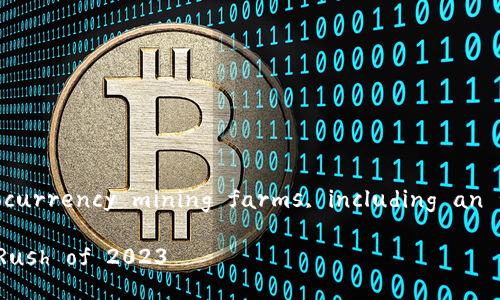
A mining farm is essentially a facility that houses a large number of cryptocurrency mining machines, all working together to solve complex mathematical problems. These farms are significant because they dominate the mining landscape, accounting for a substantial portion of the total hash rate of major cryptocurrencies. Unlike individual miners, who might use a single rig at home, these farms are equipped with advanced technology and infrastructure to maximize efficiency and profit.
The heart of any mining operation is its hardware. Mining farms typically rely on two types of machines: ASICs (Application-Specific Integrated Circuits) and GPUs (Graphics Processing Units). ASICs are designed for mining specific cryptocurrencies like Bitcoin, while GPUs can mine a variety of coins and are often preferred for their versatility.
As I walked into a mining farm nestled in the mountains, the sound of fans whirring filled the air, reminiscent of a bustling server room. Rows of machines blinked with LEDs in a mesmerizing dance of colors, as cool air from industrial fans washed over my face. Here, the energy was palpable—a convergence of technology and opportunity.

Setting up a mining farm involves careful planning and significant investment. Key considerations include the location of the farm, which should ideally be in areas with cheap electricity—often regions with surplus energy such as hydroelectric power stations. For instance, some mining farms are strategically located near these power sources, where they can benefit from lower operational costs, making mining more profitable.
Every morning, as the sun rises, miners carefully check the performance metrics of their rigs, striving for optimal efficiency. There’s a ritualistic quality to it, akin to tending to a garden—making adjustments, replacing hardware, and ensuring everything is running smoothly.
Despite the allure of profits, mining farms face challenges that cannot be overlooked. The competition is fiercer than ever, with new farms popping up continuously, which leads to a decrease in profitability as more miners compete for the same rewards. Regulatory hurdles are becoming increasingly common, with governments around the world scrutinizing mining operations for their environmental impact. For example, in many regions, energy-intensive mining operations are being limited due to the high energy consumption and environmental performance.
As the world becomes more conscious of climate change, the future of cryptocurrency mining trends towards the adoption of renewable energy sources. Solar, wind, and hydroelectric power are becoming mainstream in mining operations, helping to ease concerns about the environmental impact of mining. In fact, some mining farms are now entirely powered by renewable resources, creating a sustainable model for the future.
For example, I spoke with a miner in a facility powered entirely by wind energy. “It redefines what it means to be a miner,” he said. “We’re part of the solution, not the problem.” The pride in his voice showed just how important this transition is for the industry.
To truly understand the inner workings of a mining farm, one must immerse themselves in the experience. I vividly recall visiting a mining farm where the atmosphere was electric with anticipation. Miners shared stories of their initial ventures—the excitement of their first Bitcoin find, the late nights spent fine-tuning their rigs, and the camaraderie that developed within the community.
Every individual has a story. There was Sarah, a former software engineer who left her corporate job to pursue blockchain technology. With a knack for coding, she now runs a small mining farm from her garage. “I love the independence it gives me, the ability to innovate and create,” she shared, her eyes sparkling with passion. Her journey exemplifies the spirit driving the cryptocurrency mining revolution.
As we step into the future, the world of cryptocurrency mining promises to be as dynamic as the digital currencies themselves. With evolving technologies and an increasing emphasis on sustainability, mining farms will continue to adapt, innovate, and thrive. For those looking to dive into the digital gold rush, understanding the nuances of mining farms is crucial. Will you take the leap into this ever-changing landscape?
--- This outline and content provide a comprehensive exploration of cryptocurrency mining farms while engaging readers with real-life stories and details that evoke a sensory experience. The writing style aims to achieve a more human touch while ensuring the content is optimized for through careful keyword integration.

### 內容大纲1. **CEL加密货币概述** - CEL的起源和发展历程 - CEL的市场地位和现状2. **CEL的技术基础** - 区块链技术及其...

## 内容主体大纲### 一、引言- 介绍纳斯达克及其在金融市场中的重要角色- 简述加密货币的崛起及其对传统金融市场的...

### 内容主体大纲1. **引言** - 加密货币的普及与风险 - 为什么加密货币骗局层出不穷2. **加密货币的基本概念** - 什么...

### 内容主体大纲:1. **引言** - 加密货币的崛起 - 加密货币公司的重要性2. **加密货币公司的基本概念** - 什么是加密...